What to do when a valuation lead won’t answer the phone
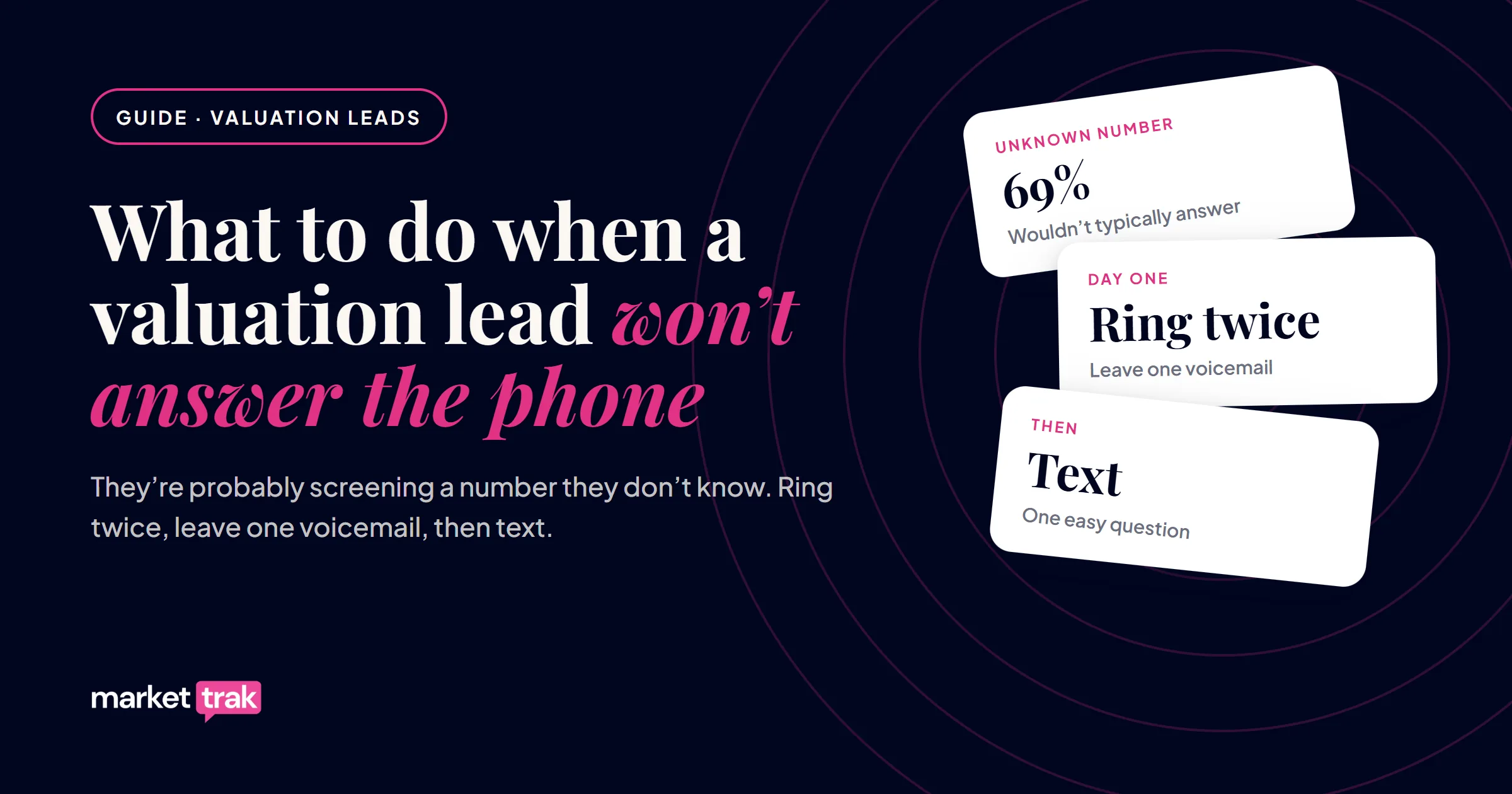
When a valuation lead won’t answer the phone, assume they’re screening a number they don’t know, because that’s far more likely than a no. Ring twice on the first day at different times, leave one short voicemail, then send a text with one easy question. After a fortnight, stop ringing and keep them on your monthly market update.
Why valuation leads don’t pick up

Ten past six on a Tuesday. A homeowner in Chorlton typed their address into your valuation tool on Sunday night, and you’ve rung them twice since. Nothing. Not even a voicemail greeting, just the ring and then the beep.
It’s tempting to read that as a no, or decide the number’s fake. Usually it’s neither. YouGov asked 6,315 adults in Great Britain in May 2025 whether they’d typically answer a call from an unknown number, and 69% said they wouldn’t. Your office line is an unknown number. They’ve never rung you.
Ofcom’s research, published in July 2024, goes into more detail. Over 90% of mobile users look at the number before deciding whether to answer, at least some of the time. Of those who check, 42% rarely or never pick up when they don’t recognise it. And when Ofcom asked the people who don’t answer every call why, 66% said they don’t want to speak to callers they don’t recognise.
So the silence mostly tells you that you’re a stranger to them. That’s fixable. Changing their mind about moving wouldn’t be.
Day one: two calls and one voicemail
The first call goes out as fast as you can make it (we’ve covered how fast to ring a new valuation lead in another guide). If they don’t answer, resist ringing straight back. Three missed calls in ten minutes from a strange number looks like exactly the kind of call people screen out.
Try again later the same day, at a different time. In the Lead Response Management Study, 4pm to 6pm was the best window for getting hold of people, Wednesday and Thursday were the strongest days, and Monday was weak all round. The study didn’t test calls after 6pm, so if the lead came in late at night, an early evening call is a fair guess. That one’s ours, mind, not theirs.
Leave a voicemail on one of the two calls. Ofcom found 30% of people who don’t answer every call reckon that if it’s important, the caller will leave a message. Keep it short, twenty seconds at most:
“Hi Jo, it’s Sam from Hartley and Co. You asked what your place on Elm Road might be worth, and I wanted to check the figure made sense to you. I’ll text you now so you’ve got my number.”
And ring from the same number every time, ideally the one on your emails and your website. If they look it up, it should lead straight back to you.
Then text them, and make it easy to reply

A text puts your name next to the number, which a missed call never does. People expect it, too: in the same Ofcom research, 22% of those who don’t answer every call said that if it’s important, the caller will try another way, like a text or an email.
Something like this works:
“Hi Jo, Sam from Hartley and Co. Thanks for using our valuation tool for Elm Road. Did the figure look about right to you? Happy to pop round for a proper look whenever suits.”
Their name, their road, and one question they can answer in a word. Leave out “please call me back”, which hands them a job and nothing else, and don’t stack three questions into one message. You want a reply, even a short one, because once they’ve replied you’re not a stranger any more.
You don’t need to repeat every detail. When a homeowner uses your Market Trak instant valuation tool, they’re emailed their figure straight away, with a button back to their valuation, unless you’ve switched that email off. You can rewrite it in your own words, so it sounds like you. The text is the personal bit on top.
If the number doesn’t connect at all, check it against what they typed. A missing 0 or an extra 44 is more common than a fake number. Then email them to say you couldn’t get through.
The rest of the fortnight
Here’s the bit most agents get wrong in one direction or the other. Some ring once and give up. Others ring every day for a week and wonder why they’ve been blocked. The Lead Response Management Study found that after about 20 hours, extra call attempts started to hurt the chances of getting hold of someone, and it suggested switching to other ways of getting in touch.
So after day one, ease off the phone. Our rhythm would be:
- Day one: two calls at different times, one voicemail, one text.
- Day three or four: one more call, at another time of day. A Wednesday or Thursday if the calendar lets you.
- Around day seven: an email with something useful in it, like your latest local market update. The only ask is a line saying you’re happy to come round when it suits.
- Day fourteen: a last call. If that goes unanswered too, a short text to say you won’t keep chasing and they know where you are.
Then stop ringing. Ofcom found that one of the most common things people do about a call they think is suspicious is block the number, and you don’t want to be the agent whose name they’ve blocked when they’re ready to sell.
When they still don’t answer
Most people who ask what their home’s worth aren’t selling this month. Plenty of them were just curious after a neighbour sold. A fortnight of silence often means “not yet”, and that’s fine. Many homeowners choose their agent long before they sell, so the job now is to stay the estate agent they already know.
Every valuation lead lands in your Market Trak leads list, and from there you can send them a local market update every month. If you’re not sure what to put in it, our guide to what goes in a local market update walks through it. Someone who ignored two calls in spring might well reply to an update in the autumn, and when they do, they’ll already know your name.
The rest of the approach, from the valuation tool to staying in touch, is on our lead generation for estate agents page.